Foreword to Part III
This article draws on cross-cultural experiences from my own life. It is written in 3 parts, of which this is the 3rd part.
← Read Part I · ← Read Part II
#7 Shifting Landscapes

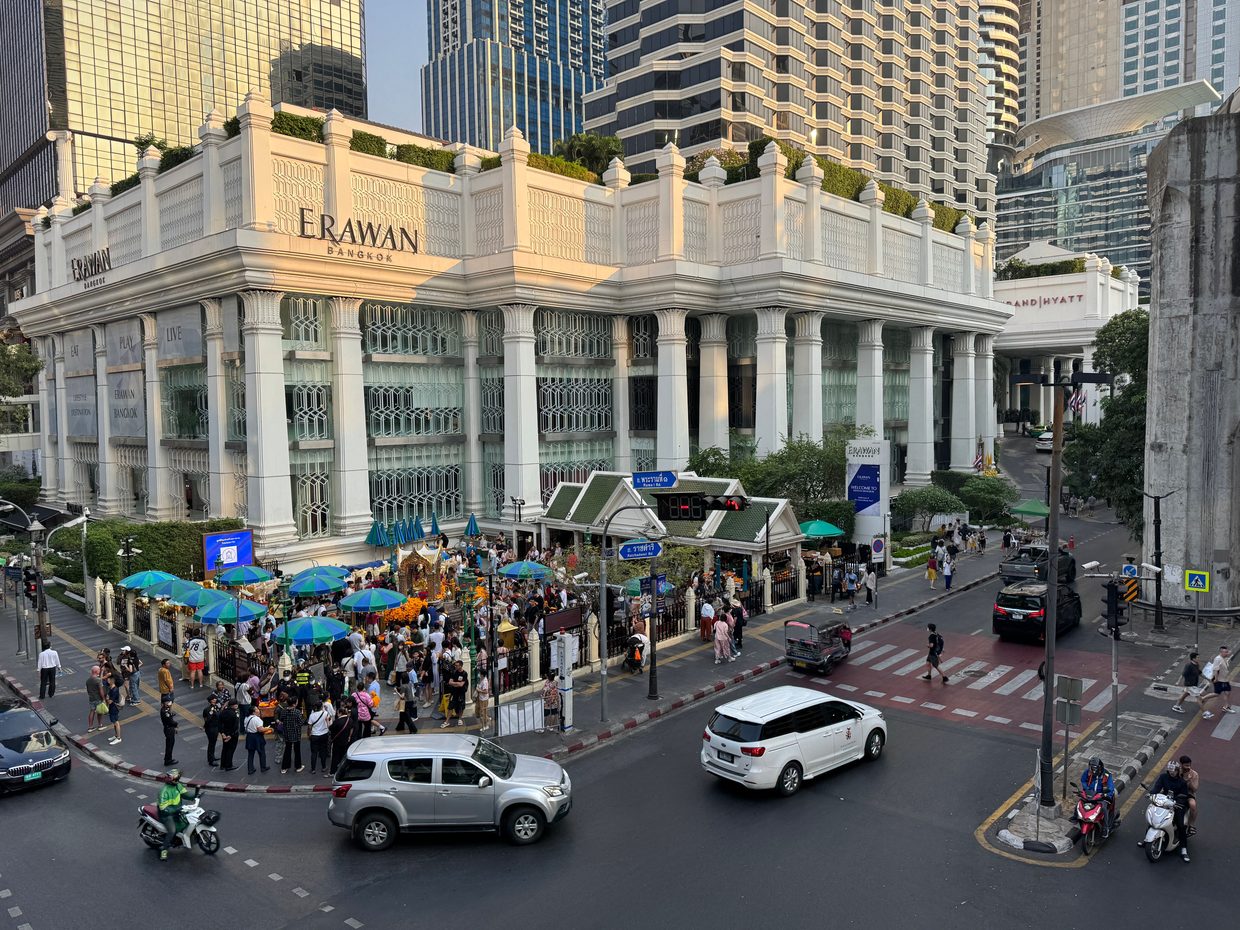
The past 30 years have seen improvements. While the differences between East and West are still pronounced, the landscape has changed. In many respects, Bangkok today offers a higher quality of life than most major cities in developed countries, especially if you have a middle-class income. Everything works and goods and services are highly accessible; people providing services are trained, experienced and generally proactive; problems get solved and customer experience (whether B2C or B2B) is continuously improving.
What is true now:
- Correct and consistent answers to due process questions are more frequent, new legislation and regulations are, however, subject to different interpretations. What's true for one municipality may not be true for another.
- Mid-level staff can and want to participate in developing solutions. While they may be confident in presenting their ideas, they would be less likely to do so if senior people are in the room.
- People end their employment without notice less frequently, but applicants consistently schedule a job interview and then fail to show up for it; staff also frequently accept employment offers and then don't show up for work. While this is true for line and supervisory staff, it is less likely for managerial positions.
- People still nod in agreement when they don't understand what is being said.
The more prestigious and desirable a Thai organisation, the more likely people are to keep their agreements, but perhaps this is also true of other countries and cultures. What has also changed from 30 years ago is that investments in training and development are substantial, and so work behaviour is continuously being modified, and professional standards are continuously on the rise.
#8 Where Thailand stands out
With any culture or country, there are always a few things that are noteworthy and that stand out. When it comes to the Thai people, I want to share 4 ways of being that I feel are significant.
A quick note before I do: the points I am about to make speak to Thai culture as an aggregate. While I have cautioned against the stating or implying of facts in a cross-cultural environment, I now, to an extent, bend my own rules. The condition of this digression is that a culture, as a whole, does present distinctive characteristics; while the speech and actions of an individual may be subject to varied interpretations, the aggregate truth of a people's culture presents a clear picture, due to the sheer force of the averages.
Thailand, as a country and a culture, stands out in the following ways:
- Being Thai means being the embodiment of compromise. Where there is the possibility of conflict, Thais will always be more likely to find a middle ground. Being Thai means doing unto others as you would have done unto yourself; if a Thai has the legal or moral high ground, he or she is more likely than most to be lenient, forgiving and gracious.
- Thais have a deep and lasting sense of gratitude. Kindness is appreciated and reciprocated. It isn't always recognised, but when Thais do recognise it, they are likely to remember it for a lifetime.
- Thais are inherently tolerant. When their ability to be tolerant is tested, they persevere silently and indefinitely, which many Westerners have characterised as stonewalling; while this is a somewhat humorous metaphor, the underlying attitude is one that should command respect. It takes strength of character to stay silent, and to not retaliate, when one is pressured or coerced into something one resists, and while Westerners might choose to argue it out, Thais choose to withdraw, and in extreme cases, to avoid the subject entirely. People less familiar with the culture would fail to see this for what it is, an olive branch offered in lieu of a culturally appropriate alternative.
- Humility is also a pervasive and persistent trait of Thais. Many other cultures praise this rare virtue and aspire to it, but Thais are naturally inclined towards it, and have it in abundance.
To put these cultural qualities into perspective, it is relevant to know that Thailand has never been colonised. In a region as diverse as Southeast Asia, Thailand occupies a geographically central position and has neighbours on 4 borders, 3 of which are politically less stable (even unstable), and with Burma (Thailand shares its longest border with this neighbour) being in a state of civil war. Witnessed within the context of the past 100 years of conflicts, Thailand has overwhelmingly maintained stability while adeptly maintaining its independence.
Some may argue against the claim of independence, stating that the commercial sector is led and controlled by the Thai-Chinese. While this may be given as evidence of a form of colonisation, it is a reality born out of generations of Chinese immigrants who have successfully integrated with Thai culture, and who also know Thailand as their home.
#9 Global Trends
Increasingly, living and working in cross-cultural environments is becoming the norm rather than the exception. Since many destinations confront the newly arrived with significant unknowns, a new trend has also started to gain momentum, one that prescribes the cross-cultural relationship by placing a frame around issues deemed important, or those carrying a high likelihood of misunderstanding or conflict.
I mention this here as a relevant and substantive counterpoint to the approach I speak for. To immerse oneself in a new culture and learn about it through interaction and relationships is, perhaps, equivalent to a long-hand approach. There is always the argument that results need to — and can — come more quickly, and that basic guidelines can stand in to ensure workable relationships, particularly in the high-transit environments of the commercial world. With global travel ever on the rise, and cross-cultural alignment needing to happen faster, leaning towards heuristics (rules of thumb) is arguably the more practical solution to a complex problem.
While framing (simplifying or streamlining) the formation of cross-cultural relationships may be justified by the demands of the commercial environment, the process is vastly more complex. Framing appropriate conduct — leading with a prescribed format for cross-cultural relationships and interactions — comes with its own risks. When we reach for formulas (the forms, etiquette, do's and don'ts) we risk precluding one of the most important aspects of any relationship, and that is the ability of people to meet and get to know each other on their own terms.
So where does this leave us? Firstly, it's important to know that two paths exist. On first comparison, the do-it-yourself and the apply-the-format paths appear to be in opposition to each other, at least in a general sense. However, the two are not mutually exclusive. For people who are regularly moved to new posts in different countries, applying a format may be more practical, since time and energy are likely to be more limited; for those choosing to stay somewhere for a longer duration, the do-it-yourself immersive approach will likely pay greater dividends in the long run.
If you're reading this article, you're likely to give breathing room to both options, and consider how they might each weigh into your specific context. If you can begin to entertain the possibility of these different approaches, you can start to build towards your own unique version, constructed out of a wider pool of knowledge and options. In this way you start to exercise choice, even if you do eventually choose to settle for the more prescriptive model.
#10 Cultural exclusivity
While many believe that expanding and deepening our cultural understanding is the way forward, there are also cultures that choose to keep themselves separate. Thailand is not such a country, and my own attitude clearly reflects the welcoming nature of the country I grew up in. So in relation to cultures that are exclusive, where does this leave the culturally curious and respectful person?
Some of us have made friends (or felt forced to make friends) with people who rejected us, or who didn't like something about us to begin with. If we are patient and observant, we quickly learn something about the preconceived ideas and patterns that people base their likes and dislikes on. We can then ask ourselves if a person or situation is worth the extra effort, and if they are, then we start to stand in a position from which the tides might eventually turn. What most of us who exert the extra effort soon learn is that people can shift from dislike to like, or at least to acceptance and tolerance; a negative posture, when met with constructive effort and a friendly attitude, eventually dissolves, or at least subsides.
When we apply this attitude to cultures that are exclusive, the same holds. While we may choose to withhold our curiosity, understanding that it is not welcome, we can maintain a constructive and friendly attitude; that is to say we avoid reacting and try to respond positively. This is a challenging balance to strike. While we try our best to remain friendly, it's also important not to be apologetic; in this way we are not apologising for cultural differences, but rather offering the benefit of the doubt, giving space to the relationship, and focusing attention on positive developments.
While many would argue that the effort outweighs the benefit, we might consider how we impact progress on a group, organisation or global level: positive effort always paves the way for future progress, and it achieves this not only for the individual, but for everyone involved. As long as we give cultural differences the upper hand, and as long as we allow them to divert attention, we lose momentum through friction. In this light it is incumbent upon us to be friendly, to be patient in environments of cultural exclusivity, and to give the added effort to be constructive wherever the social fabric is being tested.