Coach — René Anant Feddersen
Business leaders tend to gravitate towards what’s urgent. Putting out a fire or knocking what’s delayed or faulty back into line always takes priority. This is somewhat more true of an entrepreneur than of a corporate executive: the former erects an organisation from scratch; the latter works within an existing structure.
The most successful leaders are in a position to anticipate. Most of us are reacting, and while we see ourselves as part of a strategic process, our plans frequently lack depth and coordination.
The rrealpath coaching process, focused on the individual leader, places a priority on two live artefacts:
The Big Picture
is the total addressable sphere of knowledge and influence that a leader possesses. It encompasses present and future reality, and it coordinates that reality into potentiality.

The Long View
is the farthest point we are willing and able to anticipate. For some people it’s a few years, for others it’s a few decades. The clearer and farther the long view, the more rapid the progress.
To reach the top of our game, we identify and organise that in ourselves which is distinct, and focus it on the thing we want to achieve.
Having the big picture means knowing our most differentiated capabilities and organising them around our greatest opportunities.
When our capabilities and opportunities are aligned, and when we can project our ideas far into the future, then every action quickens us in the direction of our goals.
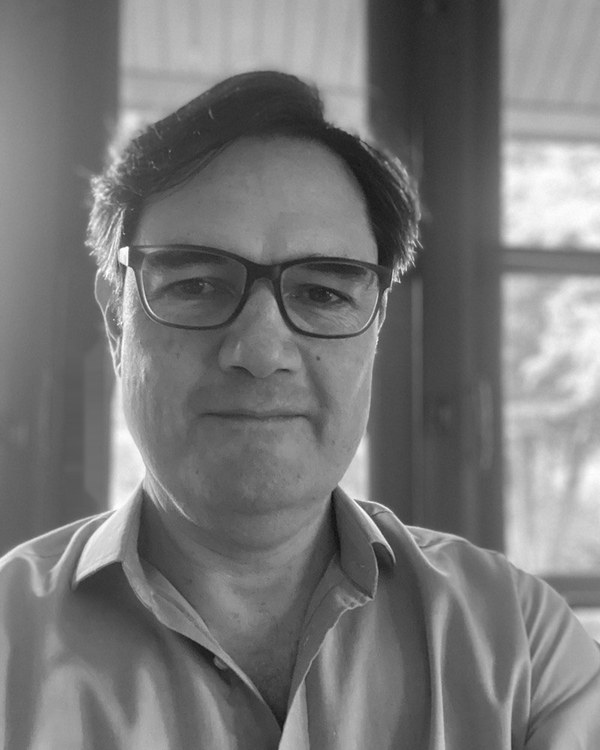
René Anant Feddersen
Executive and entrepreneur coach. Based in Chiang Mai. Native in English, German and Thai. Working across Southeast Asia and the world.
Most learning accumulates knowledge, methods and disciplines; very little is focused on understanding and developing the individual, and having them develop that which is unique and powerful in them.
While much can be self-taught, learned through education & training or practised through hands-on experience, our greatest challenges — and opportunities — deserve the greatest focus.
Working with a coach gives you the absolute trust of a one-on-one relationship. It therefore allows you to discover and learn from those things that are the most personal to you: exploring the unknown, confronting fears, deconstructing major obstacles that persist, and finding ways to reach for higher levels of performance and personal fulfilment.
I recently left BCG after a multi-decade career in consulting and tech, including time at Meta in Southeast Asia and New York. I wanted to explore a next chapter built around a portfolio of meaningful work rather than a single full-time role.
I chose René because he lives a more deliberately designed, balanced and unconventional life than most people I know. He made another way of living feel possible, then worked with me to define what it could look like in practice.
He has helped me set clear short- and medium-term goals and keeps me honest when my execution wavers. He is remarkably good at spotting habits and patterns, some built over decades, that quietly get in the way of progress.
Most importantly, he has given me the confidence to experiment with a very different path, one I’ve wanted to pursue for years. I’d recommend René to anyone ready to rethink how they work and live.
Born and raised in Bangkok, lived and worked in Asia, Europe and the United States. I have 32 years of business experience covering startups, SMEs and multinational corporations. During that time I also worked extensively as a coach and a facilitative trainer.
Business is among the most challenging careers, while it is also one of the most exciting. Mine was mostly spent in innovative startup environments, and in emerging economies.
Business is the never-ending school of hard knocks and tough decisions. It provides very little insulation, and so it continuously builds discipline, character and life experience.
It requires the broadest foundations of knowledge, it uses the benefit of accumulated experience, and it develops fortitude through having to deal with ever-changing environments: rules & procedures, market conditions, competition, laws, funding requirements, new technologies, and more.
Most of all it requires us to deal with people and to maintain strong relationships under less-than-ideal conditions. It means dealing with others as much as dealing with ourselves.